Questão 35 de UNESP 2025 — VUNESP · 2ª fase — 2º dia
Nesta questão
Enunciado
Leia o texto para responder, em português, às questões 35 e 36.
Caravaggio’s lost masterpiece
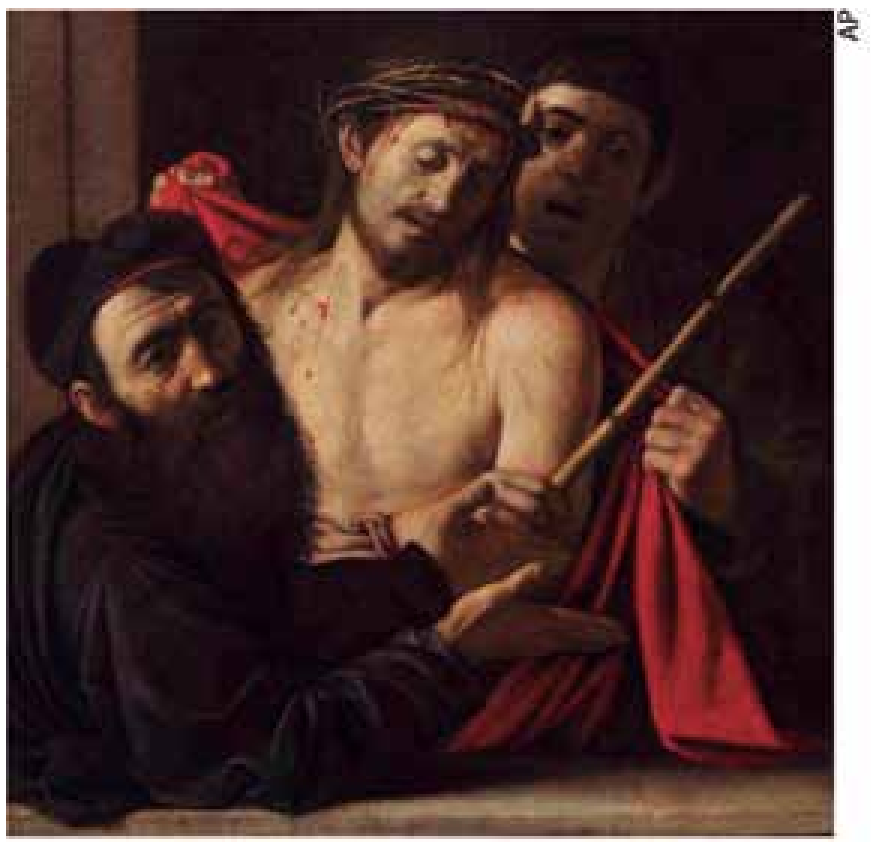
In 2024, on May 27, “Ecce Homo” — Latin for “watch the man” — is shown in public for the first time since Michelangelo Merisi, better known as Caravaggio, painted it four centuries ago. The painting, of Christ being exhibited before his crucifixion, spent all those years in private hands, and was eventually misattributed to an obscure artist rather than to the Italian Baroque master.
Only in 2021, when an auction house in Madrid put the scratched and worn-out work under the hammer with a starting bid of just €1,500 (US$1,627), did the city’s Prado National Museum call in experts to check its provenance. They were unanimous: this was a lost work by Caravaggio, whose paintings are prized for their rarity — barely 60 have survived — as much as for their quality. A British art collector bought “Ecce Homo” for €36 million and has loaned the now-restored painting to the Prado until October 2024.
(Brooke Unger. https://view.e.economist.com, 27.05.2024. Adaptado.)
a) De acordo com o primeiro parágrafo, o que ocorreu no dia 27 de maio de 2024? Quando o quadro mencionado no texto foi pintado?
b) Conforme as informações do primeiro parágrafo, o que a pintura representa? Qual a controvérsia que envolveu a autoria do quadro?
Fonte: VUNESP · UNESP 2025 · 2ª fase — 2º dia.
2ª fase — 2º dia
Resposta discursiva
Resposta discursiva ainda indisponível no acervo.
Estude com a MMI
Matemática e Física com direção.
Conheça os cursos com Ramon Siqueira e os materiais para a sua preparação.