Questão 23 de UNESP 2012 — VUNESP · 1ª fase
Nesta questão
Enunciado
Instrução: Leia o texto e analise o gráfico para responder às questões de números 21 a 25.
Why use biofuels for aviation?
The aviation industry has seen huge growth since its beginning. Today, more than two billion people enjoy the social and economical benefits of flight each year. The ability to fly conveniently and efficiently between nations has been a catalyst for the global economy and has shrunk cultural barriers like no other transport sector. But this progress comes at a cost.
In 2008, the commercial aviation industry produced 677 million tones of carbon dioxide (CO_2). This is around 2% of the total man-made CO_2 emissions of more than 34 billion tones. While this amount is smaller compared with other industry sectors, such as power generation and ground transport, these industries have viable alternative energy sources currently available. For example, the power generation industry can look to wind, hydro, nuclear and solar technologies to make electricity without producing much CO_2. Cars and buses can run on hybrid, flexible fuel engines or electricity. __________-powered trains can replace __________ locomotives.
The aviation industry has identified the development of biofuels as one of the major ways it can reduce its greenhouse gas emissions. Biofuels provide aviation with the capability to partially, and perhaps one day fully, replace carbon-intensive petroleum fuels. They will, over time, enable the industry to reduce its carbon footprint significantly.
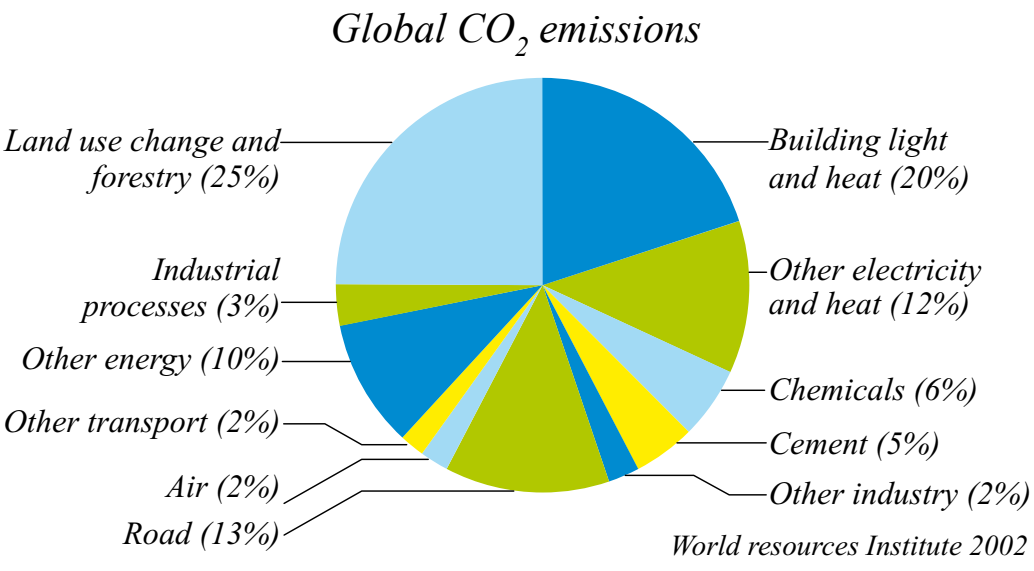
(Beginner’s Guide to Aviation Biofuels, May 2009. Adaptado.)
De acordo com o texto, os setores que ocasionam as menores taxas de emissão de CO_2 no mundo são
Fonte: VUNESP · UNESP 2012 · 1ª fase.
1ª fase
Gabarito
Gabarito: alternativa E.
Estude com a MMI
Matemática e Física com direção.
Conheça os cursos com Ramon Siqueira e os materiais para a sua preparação.