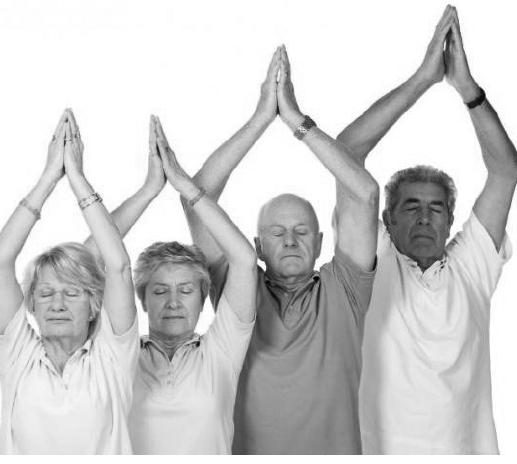
Inglês · Yoga may ease symptoms for atrial fibrillation
Nesta questão
Enunciado
INSTRUCTIONS: Read the following text carefully and then choose the correct alternatives that answer the questions or complete the statements placed after it.
Yoga may ease symptoms for atrial fibrillation
patients
Written by Catharine Paddock PhD
People with paroxysmal atrial fibrillation may find that
yoga helps them enjoy a better quality of life and reduce
their blood pressure and heart rate.
Many of the patients reported that it felt good to let goof their thoughts and just be inside themselves for a while inthe yoga sessions.
This was the main finding of a study published in the European Journal of Cardiovascular that compares patients with paroxysmal atrial fibrillation who practiced yoga with patients who did not.
Atrial fibrillation (AF) is a condition where the heart pumps blood at an irregular and often abnormally fast rate. This disrupts the flow of blood in the chambers of the heart and increases the risk of blood clots, which can result in a stroke.
AF episodes are often accompanied by chest pain, dizziness and sudden and severe shortness of breath (dyspnoea). The symptoms are unpleasant and leave patients feeling anxious and stressed as they wonder when the episode will finish, or as they anticipate the next one.
In paroxysmal AF, the episodes typically last less than 48 hours and stop by themselves, although they can last up to 7 days.
Lead author Maria Wahlström, a nurse who is studying for a PhD at the Sophiahemmet University and the Karolinska Institute in Stockholm, Sweden, explains the effect paroxysmal AF has on people’s lives:
“Many patients with paroxysmal atrial fibrillation can’tlive their lives as they want to – they refuse dinnerswith friends, concerts and travelling – because theyare afraid of an AF episode occurring.”
AF is the most common heart rhythm disorder and affects around 1.5-2% of people in the developed world. There is no cure for the condition, and treatment focuses on managing symptoms and preventing complications like stroke by using medication, cardioversion (electric shock to try and restore normal heart rhythm) and catheter ablation (removal of some tissue in the heart).
Fast facts about AF
• The risk of developing atrial fibrillation increases with age.
• Men and women have the same risk of developing it.
• About 1 in 4 people aged 40 years and older will develop the heart condition in their lifetime.
Wahlström says many patients use complementary therapy to help them cope with their condition, and she and her colleagues wanted to find out how effective one of these – yoga – might be.
For their study, the researchers randomly assigned 80 patients with paroxysmal AF to attend yoga sessions or to a control group that did not do yoga. Both groups received standard treatment with medication, cardioversion and catheter ablation as needed.
The yoga group had a single 1-hour, instructor-led session of yoga per week for 12 weeks. In the sessions, the patients practiced light movements, deep breathing and meditation.
The researchers measured quality of life, heart rate and blood pressure in all the participants at the start and at the end of the study. To measure quality of life – both physical and mental – the participants filled in two questionnaires: the Short-Form Health Survey (SF-36) and the EuroQoL-5D (EQ-5D) Visual Analogue Scale (VAS).
At the end of the 12 weeks, the yoga group had highermental health, lower heart rate and lower systolicand diastolic blood pressure than the control group.
Wahlström suggests the yoga deep breathing exercises may have helped the AF patients balance the parasympathetic and sympathetic nervous system, leading to less variation in heart rate. Also, breathing and movement exercises may also have beneficial effects on blood pressure.
Wahlström concludes:
“A lot of the patients I meet who have paroxysmal AF are very stressed. Yoga should be offered as a complementary therapy to help them relax. It may also reduce their visits to hospital by lowering their anxiety until an AF episode stops.”
Estimates suggest that over 2.6 million Americans have AF. There is also a view that this could be an underestimate, as often the condition is only spotted during routine health checks and many people do not realize they have it.
Available on: <http://www.medicalnewstoday.com/ articles/307850.php>. Assessed on March 16,2016, edited.
According to the text, regarding people who suffer from AF, we can affirm some of the characteristics listed below. Mark which are TRUE or FALSE:
( ) After forty, about 25% of the population will develop AF.
( ) All who have an AF condition will have a heart stroke.
( ) More women develop atrial fibrillation than men.
( ) Older people are more prone to develop atrial fibrillation.
Ideia central: conferir quantificadores em cada afirmação.
A primeira é verdadeira no sentido do texto: uma em quatro pessoas a partir dos 40 anos desenvolveria a condição ao longo da vida. A segunda é falsa: risco de AVC não significa que todos o terão. A terceira é falsa porque o artigo apresenta risco igual entre homens e mulheres. A quarta é verdadeira: o risco aumenta com a idade.
Resposta: B — T, F, F, T.
Estude com a MMI
Matemática e Física com direção.
Conheça os cursos com Ramon Siqueira e os materiais para a sua preparação.