Inglês · How do different energy sources affect public health?
Nesta questão
Enunciado
How do different energy sources affect public health?
Published: Thursday 6 August 2015 at 8am PST
When it comes to health, a lot of concern is given to how we use our bodies and what we put in them. But the types of environment they are exposed to can also have a huge bearing on how healthy they are.
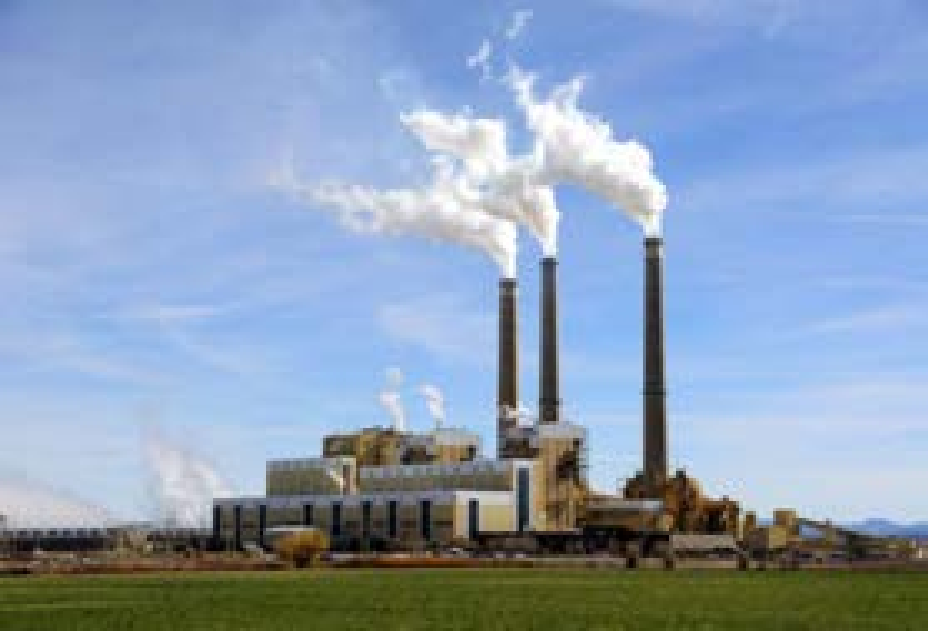
Power plants using coal are known for producing greater quantities of carbon emissions than other forms of energy.
Earlier this week, President Obama unveiled the US Environmental Protection Agency’s (EPA) Clean Power Plan, aiming to reduce carbon dioxide emissions by 32% from the level they were at in 2005 over the next 15 years.
“We can choose to believe that Superstorm Sandy, and the most severe drought in decades, and the worst wildfires some states have ever seen were all just a freak coincidence,” says Obama. “Or we can choose to believe in the overwhelming judgment of science – and act before it’s too late.”
This will entail a shift in how America generates its energy. Power plants are the largest source of carbon emissions in the US, producing around one third of the country’s greenhouse gas pollution, and so many will need to change their methods of energy production to make them cleaner.
The main focus of this policy is to address the threat of climate change, yet the move is likely to have public health implications as well. In June, a report published in The Lancet described climate change as a «medical emergency» and the fight against climate change as the greatest global health opportunity of the century.
Indeed, while the US military has described the impacts of climate change as “already accelerating instability in vulnerable areas of the world and are serving as catalysts for conflicts,” it is the impact on public health that could be seen as the most significant outcome of the plan’s implementation.
With all this in mind, this Spotlight will examine the impact of different energy sources on public health. Is coal as harmful as is made out? Is what is good for the health of the planet equally good for the health of the public?
Bad news for coal, good news for lungs?
It has been widely regarded that the coal industry will be hardest hit by changes brought about by the proposed plan, and many industry officials and states dependent on coal mining are already gearing up to challenge the policy.
However, power plants powered by coal are estimated to produce twice the amount of carbon pollution that is produced by plants using natural gas.
Carbon pollution has long been recognized as harmful to health, and the White House has made significant claims about how reducing these emissions will have an impact on improving public health.
They predict that by 2030, the Clean Power Plan will prevent up to 3,600 premature deaths, 1,700 non-fatal heart attacks, 90,000 asthma attacks in children and 300,000 missed days at work and school.
The Natural Resources Defense Council estimate that American power plants emit more than 2 billion tons of carbon dioxide into the atmosphere every year. This drives temperature increases and raises levels of smog – a mixture of pollutants – in the air that can cause asthma and make the lungs more susceptible to infection.
While carbon dioxide makes up 82% of greenhouse gas emissions in the US, power plants also emit methane and fluorinated gasses, although these are produced in more significant quantities elsewhere, such as in agriculture.
Not only does air pollution directly cause illness but it can indirectly increase the risk of several health conditions. Rising temperatures – one consequence of air pollution – can expand the reach of vector-borne diseases and increase the risk of more intense and frequent extreme weather events, such as heatwaves, floods and droughts.
Last year, the World Health Organization (WHO) reported that 1 in 8 deaths worldwide in 2012 were attributable to air pollution. In terms of diseases linked to outdoor air pollution, WHO stated that 40% of deaths were due to ischemic heart disease, 40% were due to stroke and 11% were due to chronic obstructive pulmonary disease (COPD).
As coal is recognized as the foremost producer of carbon emissions in the US, it would appear that it could have the biggest impact on public health out of all sources of energy, and thus a move toward other methods of energy production is well-advised.
Nuclear and renewable sources of energy
There are a wide range of alternatives to fossil fuels available, however, that do not produce anywhere near the level of carbon emissions as more popular sources like coal and gas. But do they have problems of their own?
Nuclear power plants provided the third largest proportion of America’s electricity in 2012. Its supporters state that its use reduces greenhouse gas emissions and saves on resources in transport, handling and extraction as it requires less fuel to create more energy.
However, nuclear reactors and the preparation of nuclear fuels are believed to release radioactive materials into the surrounding air and water. It takes a long time for nuclear waste to lose its radioactivity and subsequently its health risks, meaning that waste products must be carefully disposed of or stored to avoid contaminating the environment.
Supporters of nuclear power state that the amount of radiation that the public is exposed to from nuclear power plants is minuscule in comparison with natural sources of radiation. The World Nuclear Association report that while the nuclear industry is the source of 1% of radiation exposure, 85% comes from natural sources.
In contrast, the Energy Justice Network state that many studies have associated increases in the risk of cancers and infant mortality among people living near nuclear reactors. One study reported that levels of a radioactive pollutant called strontium-90 were found to be 30-50% higher in the baby teeth of children in close proximity to nuclear plants.
Modern nuclear disasters at Chernobyl and, more recently, Fukushima in Japan, have shown that when problems occur at nuclear reactors, the consequences can be far-reaching. Recently, MNT reported on a study that suggested mental illness could be the biggest risk from nuclear accidents.
Although the dangers of nuclear power continue to be debated, there is less uncertainty surrounding renewable sources of energy. Solar power, wind power and hydropower use various natural sources to generate power and do not burn any fuels.
Hydropower utilizes dams to channel the movement of water to produce electricity. Although they do not directly produce air emissions, decaying vegetation in the lakes created by hydropower dams produces methane that plays a role in global warming.
Solar and wind power do not burn any fuels and do not cause pollution. The use of these sources of energy is what is hoped will drive the reduction in carbon emissions proposed by the Clean Power Plan and subsequently bring about the benefits to public health that the White House has identified.
While critics question whether or not these forms of energy will be able to meet the needs of the general public – both in terms of power and economics – it is unquestionable that switching to these sources of energy will prevent the range of different health problems that are caused both directly and indirectly by other power sources.
Available on: <http://www.medicalnewstoday.com/articles/297847.php>, accessed on August 20, 2015, edited. (Written by James McIntosh)
The text states that
A)
coal produces twice the pollution that natural gas does.
B)
plants powered by coal will have to be shut.
C)
public health will suffer no good results from the plan.
D)
there’s no proof that carbon pollution is harmful to health.
Fonte: FUNDEP · FAME 2016/1 · Questões objetivas.
Questões objetivas
Resolução comentada
Gabarito: alternativa A.
Não oficial — Prova A.
Ideia central: interpretar “twice” numa comparação.
O texto estima que usinas a carvão produzam o dobro da poluição de carbono de usinas a gás natural. “Twice the amount” significa duas vezes a quantidade. A alternativa A reproduz essa comparação, entendida no recorte de poluição por carbono apresentado.
Resposta: A. O artigo não afirma que todas as usinas a carvão necessariamente serão fechadas.
Estude com a MMI
Matemática e Física com direção.
Conheça os cursos com Ramon Siqueira e os materiais para a sua preparação.