Questão 32 de FMJ 2026 — VUNESP · Prova II
Nesta questão
Enunciado
Leia o texto para responder às perguntas de 31 a 35.
Fifty years ago, Junko Tabei became the first woman to summit Everest — why do so few people know her story?
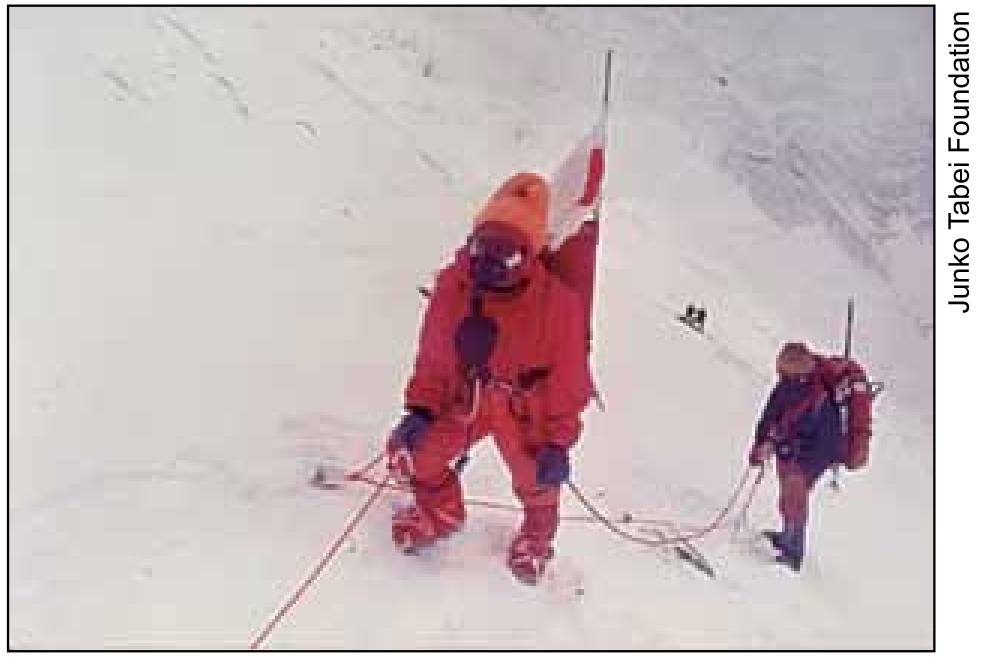
It was May 4 1975. The Japanese Women’s Everest Expedition team had been living at a high altitude for six weeks, and were less than a week away from their scheduled arrival at the summit of Mount Everest. Exhausted, Junko Tabei and her team stopped at 6,300m to rest.
Then — avalanche!
In the early hours, tons of ice and snow engulfed the camp, burying several of the teammates. Crushed by the snow and ice, Tabei was unable to move. It took the strength of four elite Nepali climbing guides, who were assisting the expedition, to pull her out. Suffering severe bruising, Tabei argued that she did not need to be returned to base camp to recover. It had taken five years for this group — the first all-women team — to get to Everest. The pressure on them to succeed was immense, given the limited number of annual international permits to climb Mount Everest. If they gave up, they might have to wait several years to make another attempt.
Meanwhile, on the Tibetan side of the mountain, Tabei’s team had competition. A 200-strong Chinese team was also working to place a woman on the summit at the same time. Unfortunately, the Chinese team suffered a climbing accident resulting in the death of a team member. They retreated to recover — only to be ordered by the Chinese government to “climb ahead of the Japanese women”.
They were too late. On May 16 1975, the all-women Japanese expedition worked together to place Tabei on the summit of Everest, which made her the first woman to reach the peak. Eleven days later, the Chinese team made another attempt; and Pan Duo became the second woman to summit Everest.
Prior to these two successful expeditions, only 38 people had summited Everest — all of them men. News of Tabei’s feat travelled fast across Asia, but it made little impact in the west. Tabei later revealed that the expedition encountered significant resistance, “Most of the men in the alpine community opposed our plan, claiming it would be impossible for a women-only expedition to reach Everest.” This has much to do with the stories we tell about man — and it’s almost always a man — versus nature.
(Jenny Hall. https://theconversation.com, 12.05.2025. Adaptado.)
According to the third paragraph, Junko Tabei did not abandon the expedition to the Everest because
Fonte: VUNESP · FMJ 2026 · Prova II.
Prova II
Gabarito
Gabarito: alternativa D.
Estude com a MMI
Matemática e Física com direção.
Conheça os cursos com Ramon Siqueira e os materiais para a sua preparação.