Inglês · Teen pregnancy: despite progress, more prevention needed
Nesta questão
Enunciado
Text 1
Teen pregnancy: despite progress, more prevention needed
Wednesday 9 April 2014 – 8am PST
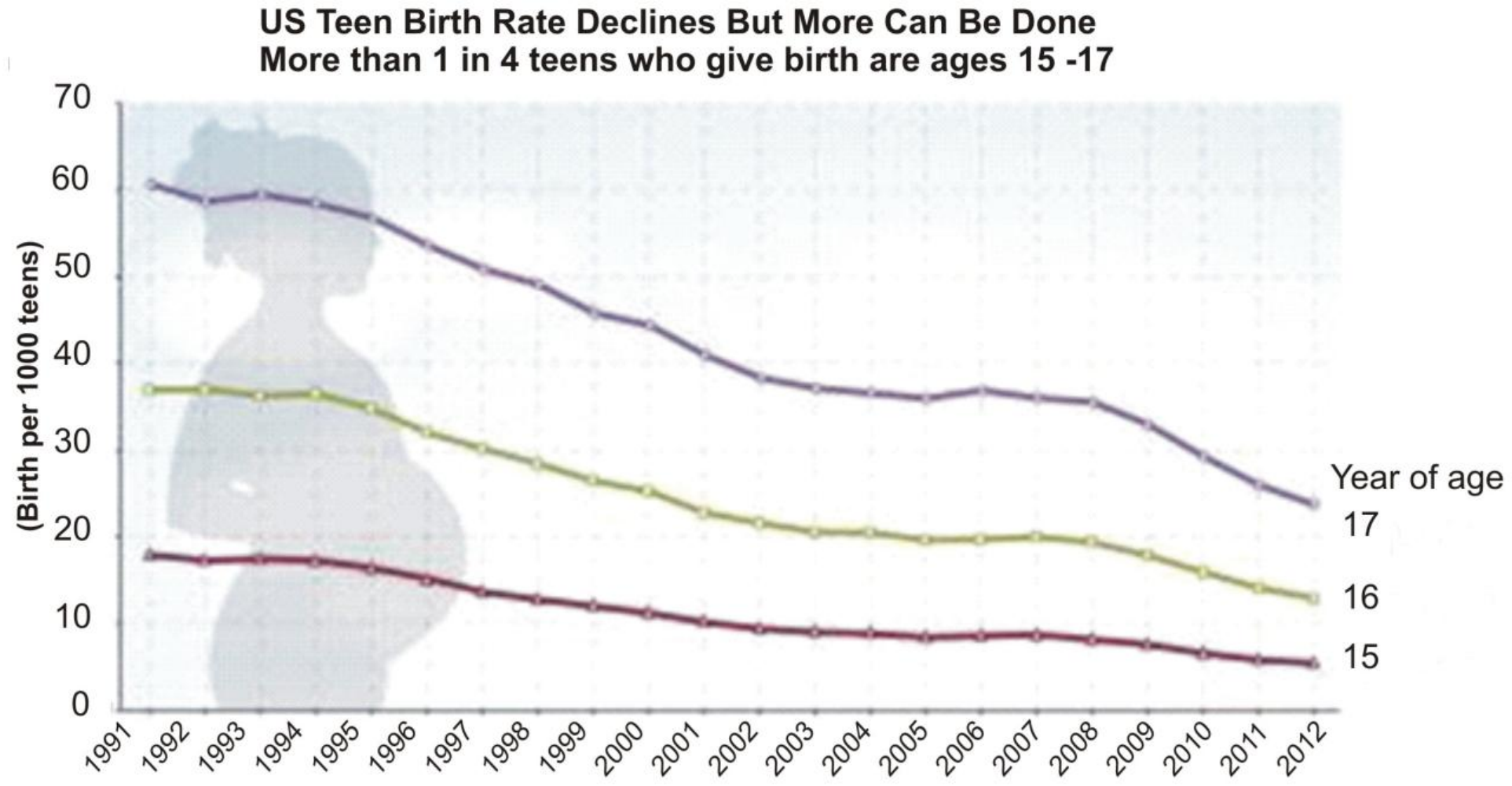
A newreportfromtheCentersforDiseaseControlandPreventionrevealsthatthoughbirthstoteensaged15to17havedecreased,girlsfromthisgroupintheUSarestillhavingnearly1,700birthsaweek.Theorganizationsaysthishighlightstheneedforinterventionstargetedatteens.
Not only do teenage mothers face hardships, but their babies are also at risk for certain adverse outcomes, such as increased medical risks and emotional, social and financial costs.
The latest Centers for Disease Control and Prevention (CDC) VitalSigns report on teen pregnancy has now been posted online, and the organization notes that it was created to "continue the dialogue about teen pregnancy and its burden on our nation's youth."
To arrive at their findings, the researchers examined birth data from the National Vital Statistics System, as well as adolescent health behavior data from the National Survey of Family Growth.
"Although we have made significant progress reducing teen pregnancy, far too many teens are still having babies," says Dr. Tom Frieden, CDC director.
"Births to younger teens pose the greatest risk of poor medical, social and economic outcomes. Efforts to prevent teen childbearing need to focus on evidence-based approaches to delaying sexual activity and increasing use of the most effective methods of contraception for those teens who are sexually active."
From the report, the researchers found promising data, revealing that teen births in the US have declined over the last 20 years to the lowest level recorded in 2012. However, during that year, over 86,000 teens between the ages of 15 and 17 gave birth.
Additionally, nearly 1 in 4 teens between these ages had never spoken with their parents or guardians about sex.
Broken down by ethnicity, the data show that the birth rate in teens of this age is highest for Hispanic, non-Hispanic black and American Indian/Alaska Native teens.
"We need to provide young people with the support and opportunities they need to empower themselves," says Shanna Cox from CDC's Division of Reproductive Health. "Trying to balance the task of childbearing while trying to complete their high school education is a difficult set of circumstances, even with the help of family and others," she says, and adds:
"Teens who give birth are at increased risk of having a repeat birth while still a teenager. And these younger teens are less likely to earn a high school diploma or GED than older teens who give birth."
Although the report revealed a promising statistic – that over 90% of teens used some form of contraception the last time they had sex – most of the methods they relied on were "among the least effective."
The organization says parents and guardians play a particularly important role in helping teens avoid risky sexual behaviors, and that delivering prevention efforts earlier could encourage abstinence and birth control use.
Written by Marie Ellis
http://www.medicalnewstoday.com/articles/275283.php, Accessed on April 10,2014.
Of the sexually active teens, one CANNOTSAY that
A)
nearly all entered sexual life without any formal instruction.
B)
one in four teens had a guardian who helped them in their sex life.
C)
one quarter had never talked about the subject with their parents.
D)
the great majority had not had formal sex education.
Fonte: FUNDEP · FAME 2014/2 · Questões objetivas.
Questões objetivas
Resolução comentada
Gabarito: alternativa B.
Versão não informada — Prova A.
Ideia central: perceber a inversão entre ter conversado e nunca ter conversado.
O artigo diz que quase uma em quatro adolescentes nunca havia conversado sobre sexo com pais ou responsáveis. B transforma essa ausência de conversa em ajuda recebida de um responsável. Essa inversão é o erro central solicitado.
Resposta: B. Observe também o recorte: o dado de um quarto se refere à faixa etária citada, enquanto o dado de mais de 80% sem educação sexual formal se refere às sexualmente ativas; os grupos não devem ser confundidos.
Estude com a MMI
Matemática e Física com direção.
Conheça os cursos com Ramon Siqueira e os materiais para a sua preparação.